
New national guidance
A screening mammogram takes about 20 minutes. Most insurance plans, including Medicare, cover it at no cost to you.
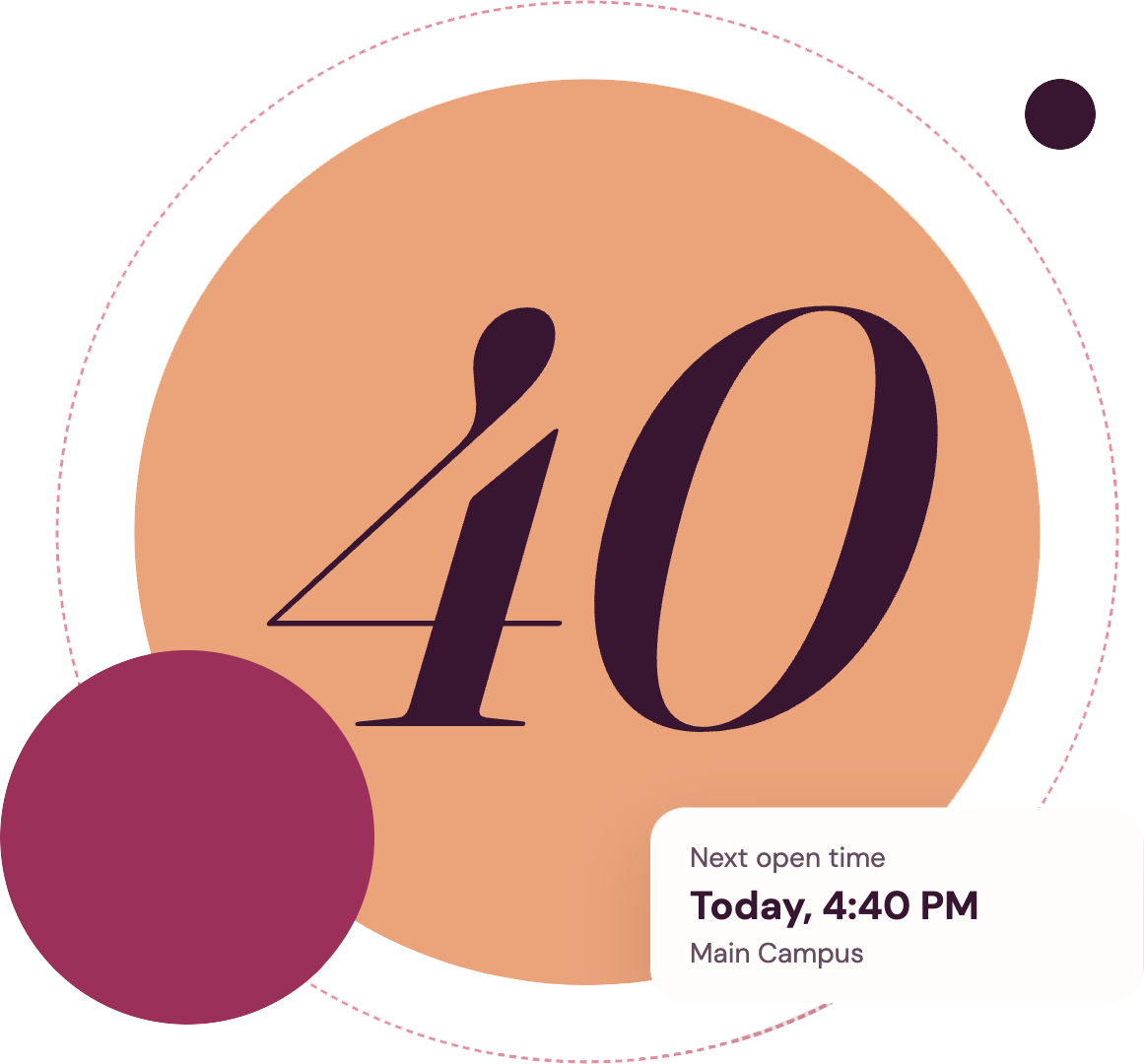








In 2024, the U.S. Preventive Services Task Force updated its breast cancer screening guidance for women at average risk.
40
Screening now starts at 40 instead of 50 for women at average risk.
19%
More lives could be saved by starting at 40, based on the Task Force's research.
Most
women diagnosed with breast cancer have no family history of it.
How often? Guidelines recommend a mammogram every 1 to 2 years from age 40 to 74. Your doctor can help you choose what fits you.
Three quick questions. If anything puts you at higher risk, we will connect you with our breast imaging team instead of booking online.
This check is general information, not medical advice.
From check-in to done, the visit takes about 20 minutes.
Bring your photo ID and insurance card. We will confirm your details and where you had past mammograms.
A technologist positions you for a few images. Each one takes only a few seconds of firm pressure.
Results go to you and your doctor. Your letter will also tell you whether your breast tissue is dense.
Before you come
Skip deodorant, powder, and lotion on your chest and underarms. Wear a two-piece outfit so you only need to change your top.
Guidelines recommend a screening mammogram every 1 to 2 years from 40 to 74 for women at average risk. Your doctor can help you decide.
Most insurance plans, including Medicare, cover screening mammograms at no cost to you. Our team can help you check your coverage.
You will feel firm pressure for a few seconds per image. Most women describe it as uncomfortable but brief, and you can ask for a pause at any time.
Dense tissue is common, and it can make cancer harder to see on a mammogram. Your results letter will tell you whether your tissue is dense, and your doctor can talk with you about next steps.
If you have had breast cancer, carry a gene change such as BRCA, or had chest radiation at a young age, talk with your care team about a screening plan made for you.
A scheduler will contact you by phone or text to confirm a time. Our scheduling team is available Mon–Sat, 9am–4pm. Your request is not a confirmed appointment until we reach you. If you have not heard back, call 773-990-5556.
The right plan depends on your health and what matters to you. Talk with your doctor about whether to keep screening.
Request received. We'll call you.
